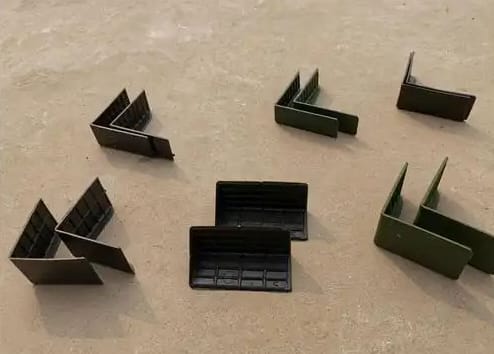
Tile corner guards are designed for the protruding corners formed where tiles meet during decoration, enhancing the wall’s aesthetic appeal. What conditions must be met during their manufacturing?

1. Clamping force: In principle, the force used to keep the mold closed must exceed the total pressure of the plastic being injected into the mold; the standard is to ensure the product is free of burrs.
2. Speed: The processing speed determines the state of the raw material within the mold’s main runner and the finished product. Excessive speed can cause burrs and scorching, while insufficient speed may lead to short shots, poor fusion, and brittleness.
3. Relationship between pressure and speed: These factors are interrelated. The goal is to ensure the raw material enters the mold uniformly and fills every corner adequately. If pressure is too low, short shots occur; if too high, it causes burrs, scorching, high internal stress, and potential mold damage.
4. Back pressure: This serves to densify the raw material during transport and compression and to expel air and moisture from behind the screw, ensuring the melt is free of gases that could affect the finished product’s surface quality.
5. Temperature: Different raw materials require specific temperature settings. If the temperature is too low, the color of the melt may be uneven, and internal stress in the finished product increases; additionally, the combination of low temperature and high pressure risks screw breakage. Conversely, excessive temperatures can lead to shrinkage, material decomposition, and color discoloration due to thermal variations during processing.