Installing mesh on ceiling drywall is not always necessary.
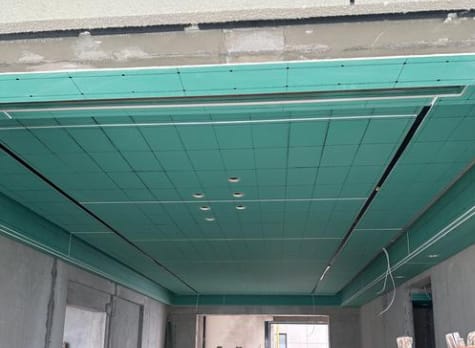
1. Purpose and necessity of installing mesh
The primary purpose of installing mesh on ceiling drywall is to enhance the bond between the drywall and the wooden framework (joists), thereby preventing safety issues such as cracking or detachment. Mesh improves the overall stability of the drywall; specifically, applying mesh fabric over the wooden framework before coating it with gypsum compound significantly boosts adhesion.
2. Situations where mesh installation can be omitted
Under certain circumstances, the step of installing mesh can be skipped.
For instance, if the existing ceiling surface is very flat, the wooden framework is securely fastened, and the gypsum compound used does not require excessive moisture, one might consider omitting the mesh. This is because, under these conditions, the bond between the drywall and the wooden framework is already sufficiently strong, requiring no additional reinforcement.
3. Other crack-prevention measures
In addition to installing mesh, other measures can be taken to prevent cracking at the drywall joints. Examples include properly treating the gaps, using appropriate joint-filling materials, and correctly applying kraft paper tape. In some cases, installers might recommend applying both kraft paper tape and mesh fabric at the joints to further enhance crack resistance. These measures can be selected flexibly based on the specific situation to achieve the best results.
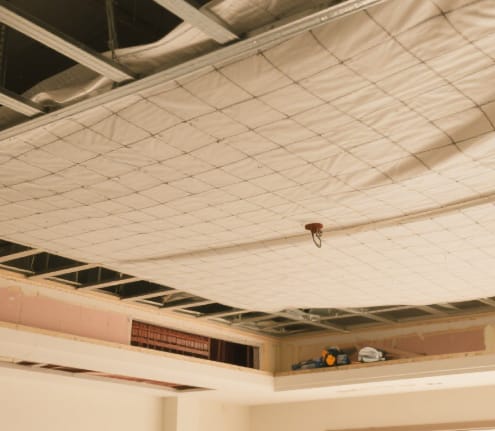
Whether or not to install mesh on ceiling drywall depends on the specific circumstances. When making this decision, factors such as the flatness of the ceiling surface, the stability of the wooden framework, and the type of coating materials used should all be taken into account.