The process of installing mesh reinforcement for gypsum plastering involves substrate preparation, mesh installation, gypsum application, and finishing work.
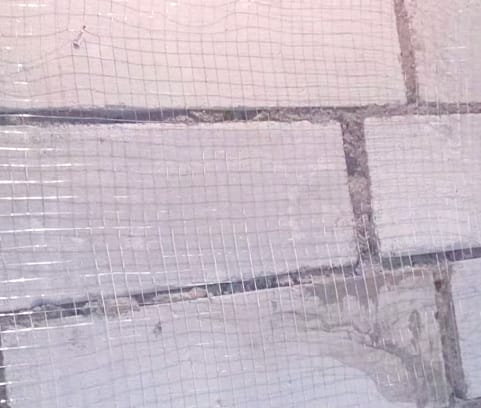
First, preparing the substrate is a crucial step prior to installing the mesh. Impurities, dust, oil stains, and loose materials must be thoroughly removed from the wall surface to ensure it is clean and level. Subsequently, a bonding agent (interface agent) is applied to the wall as a primer to enhance the adhesion between the gypsum and the wall surface.
Next comes the installation of the mesh. Based on the wall’s actual conditions and design specifications, the width and length of the mesh are determined and cut to the appropriate size. During installation, the mesh must be pressed firmly against the wall, ensuring there are no wrinkles or air bubbles. Installation typically proceeds from top to bottom and left to right; at joints, the overlap length must meet requirements to maximize overall tensile strength.
Once the mesh is installed, the gypsum application begins. First, a base coat of gypsum mortar or lightweight plastering gypsum is applied evenly over the mesh. During application, care must be taken to control the thickness and uniformity of the gypsum to ensure a strong bond with the mesh. After the base coat has partially dried, the finish coat is applied. The finish coat must also be applied evenly and smoothly to achieve the desired decorative effect.
Finally, after the gypsum plaster layer has completely dried, necessary inspections and repairs are performed. The plaster layer is checked for issues such as cracking or detachment, and any defects found are addressed promptly. Additionally, the wall’s flatness and verticality are verified to ensure the construction quality meets standard specifications.
Throughout the mesh installation process, the following points require attention: first, the mesh quality must meet standards to ensure tensile strength and durability; second, the gypsum mix ratio and blending must be uniform to guarantee construction quality; third, appropriate wall moisture levels must be maintained during construction to prevent cracking caused by the gypsum drying too quickly; and fourth, timely curing and protection measures must be implemented after construction to prevent damage to the plaster layer.